Hostages:
The bodies of two slain hostages remain in Gaza: Master Sgt. Ran Gvili, and Thai national Sudthisak Rinthalak.
Hamas claim that it will take a long time to reach the bodies, because their captors were killed, so the exact location isn’t known, and the area is under heavy rubble.
Qatar has come to Hamas’s rescue, by fighting for the ceasefire to continue on to the next stage, even without the return of the last two hostages.
The spokesman for Qatar’s Foreign Ministry told local media, “We do not believe that Israel should be allowed to disrupt the implementation of the agreement because of these two bodies.”
The second phase of the agreement would have the IDF withdraw from parts of Gaza—but only after Hamas is disarmed in those areas.
Gaza:
The saga of the terrorists trapped in a tunnel in east Rafah, in Israel’s area of control, is slowly coming to an end. To date, around 40 of the terrorists have been eliminated—including the leadership, and a handful were captured alive.
On Friday, following intensive airstrikes around the tunnels, IDF troops found and eliminated nine of the terrorists.
Overnight (Sunday), four more terrorists emerged from the tunnel, and ground forces of the Nahal Brigade directed the Air Force to eliminate them. The four turned out to be the entire leadership: the East Rafah battalion commander, his deputy, a company commander in the battalion, and Abdallah Hamad — son of Ghazi Hamad, a prominent member of Hamas’s Political Bureau.
On the body of one of the terrorists, IDF troops found the assault riffle which belonged to hero Staff Sgt. Or Mizrahi. Mizrahi, also from the Nachal Brigade, was killed while battling terrorists on October 7th.
The IDF’s Gaza Division (143) is continuing the hunt to remove every last terrorist from the area.
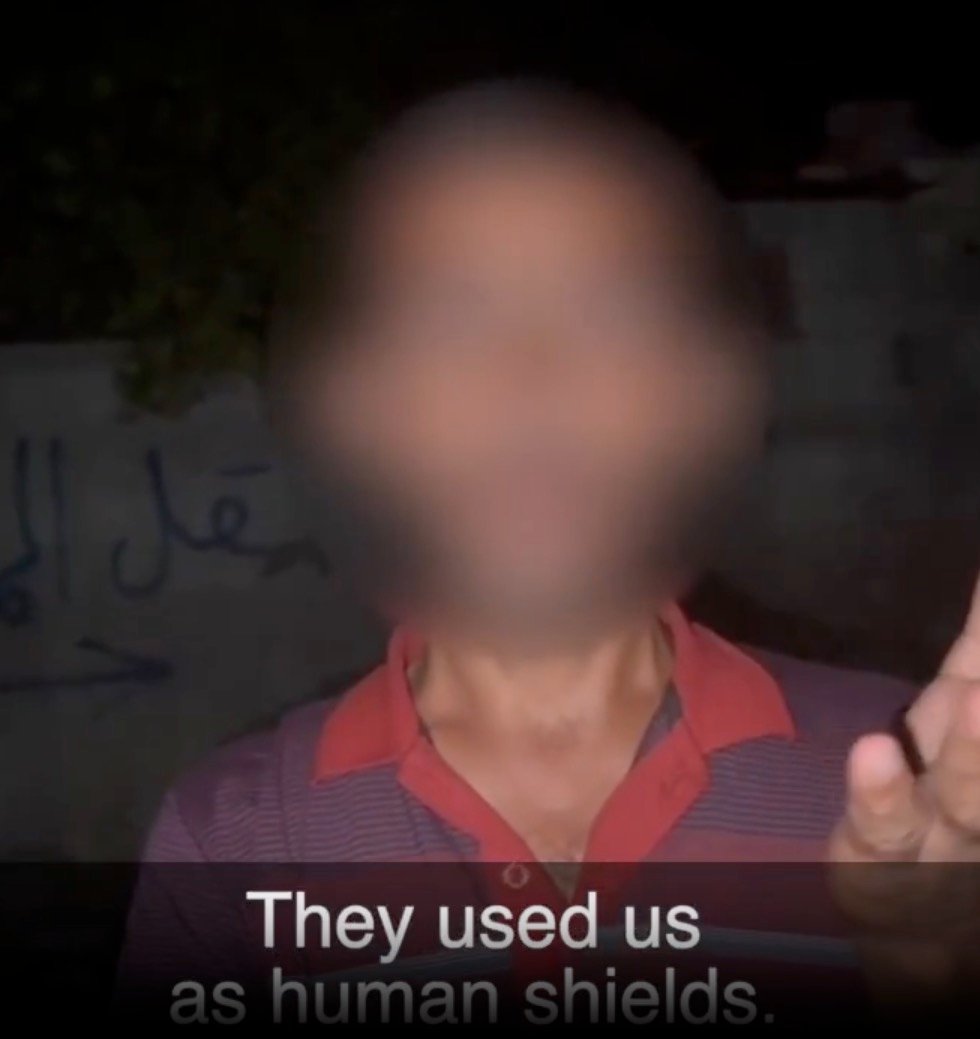
Interestingly, Abu Shabab’s militia, which is located nearby under IDF protection, also captured two of the tunnel terrorists. The militia published videos of the terrorists (who do not look like they’re doing well) calling on the others to surrender.
**
The IDF has reported an average of 3 terrorist suspects who cross the Yellow Line per day, violating the ceasefire agreement. The terrorists, who quickly approach IDF positions, and appear to be armed, are immediately eliminated. Based on what I hear from soldiers inside, there are far more than 3 incidents per day.
In the years leading up to the October 7th, the IDF relaxed security along the border fence. While the official rule was that it was forbidden to approach, the IDF gradually decided that it was not worth the public outcry to forcibly defend the fence.
Hamas gradually sent increasing numbers of Gaza’s civilians to approach the border, and then terrorists themselves felt comfortable walking right up to the fence knowing that there would be no response. Entry-rank IDF observation soldiers told their superiors that the border activity was suspicious, but their warnings were ignored. This lenient policy significantly backfired on October 7th, when thousands of terrorists, facing no consequences, rushed the fence all at once.
The IDF has since learned the lesson – in order to prevent an even larger massacre and war, the border lines must be firmly enforced.
Humanitarian Aid:
An average of 600 – 800 trucks of humanitarian aid enter Gaza each day.
Over the last few months, the IDF approved entry of over 100,000 pallets of winter-related items, shelter equipment, and sanitation supplies.
A new International Medical Corps (IMC) field hospital was opened in Gaza last week. The facility is designed to expand essential medical services in areas of prenatal care, mental Health, Physiotherapy, and Inpatient Care for the civilian population.
The new field hospital includes 150 beds and 200 medical and support staff. It has already been treating over 1,000 patients a day. This is the 15th field hospital to be established in Gaza since the start of the war.
Lebanon:
On Thursday the IDF carried out a series of airstrikes in Southern Lebanon, targeting Hezbollah infrastructures which were in violation of the ceasefire agreement.
The targets included several launch sites where weapons were stored, a warehouse containing weapons, and military positions used by Hezbollah to advance attacks against Israel.
**
November 27th was a year since the ceasefire agreement came into effect in Lebanon.
During this time, the IDF’s Northern Command Forces and Division 91 have been operating throughout Lebanon to prevent Hezbollah from rebuilding. In addition, the Mountains Brigade (810) of Division 210 is operating in the Lebanese Mount Dov, in parallel with their activities in Syria.
In the last year, the forces carried out 1,200 targeted operations, and eliminated more than 370 terrorists in Lebanon—primarily from Hezbollah, but also from Hamas and other related terror groups.
**
According to all reports, while Hezbollah is no longer able to carry out a mass infiltration attack, they are still succeeding in rebuilding their weapons arsenal and missile launching capabilities.
After the burial of Hezbollah military chief Haytham Ali Tabtabai — eliminated by the IDF two weeks ago — Hezbollah Secretary General Naim Qassem launched a new round of threats toward Israel, declaring: “This is blatant aggression and a clear crime. We have the right to respond, and we will choose the timing.”
So far there are no signals of the timing being imminent. Knowing Hezbollah and their boss Iran, it could take them anywhere between two weeks to five years to respond, and the response could be anything from an attempted terror attack to a round of missiles.
Meanwhile, the December 31st deadline for Lebanon to disarm Hezbollah is just a month away, with less than nothing to show. There is widespread speculation that the IDF will move in to finish the job once the deadline arrives, though it is also possible that the IDF will want to avoid a northern war at the start of the snowy season.
Should you still come to visit during Chanukah and winter break? Absolutely yes, always. (Even if it’s just for the sufganiyot.)
Judea & Samaria:
This morning, the police’s elite Yamam unit arrested a cell of five terrorists who were planning an imminent attack. The terrorists were caught in the village of Barta’a, which is right on the border of the Green Line in northern Samaria.
Later, in the village of Artach, IDF special forces arrested terrorist Ahmed Nassrallah, who served as a key arms dealer in the Tulkarem terror network. The terrorist was transferred for further Shin Bet investigation.
**
Israeli security forces (IDF, Shin Bet, and Border Police) are continuing the major counterterrorism operation in the villages around Jenin, in northern Samaria.
In the last week, the forces raided several hundreds of targets in the villages of Tamun and Far’a. The forces located operational observation posts, explosives, weapons, and incitement materials in support of Hamas.
More than ten wanted terrorists were arrested, including weapons dealers and terrorists who advanced plans against IDF forces. Dozens of additional suspects were transferred for further investigation.
As part of the operation, the IDF determined that 24 buildings in the Jenin “refugee camp” neighborhood required demolition. These are buildings which contain explosive labs, ammunition, weapons, and booby traps to prevent IDF entry. Early last week, the residents of the condemned building were given advance warning to remove their belongings.
**
On Thursday evening, as part of the ongoing operation, IDF and Border Police forces carried out a high-risk counter-terror operation in the city of Jenin. The mission targeted wanted terrorists of the Jenin terror network who had previously carried out reckless attacks, including throwing explosives and opening fire on Israeli security forces.
The forces entered the area and surrounded a building where the two suspects were hiding, initiating a siege that lasted several hours. Due to the threat level, an engineering vehicle was brought in to safely advance the operation. After hours of pressure, and fearing the engineering vehicle, two terrorists began to exit the building, with their hands up.
According to the Border Police officers on the ground, the situation remained dangerous even after the terror suspects emerged. The troops did not know whether the terrorists were armed or carrying explosive devices, and therefore began standard security procedures. However, the suspects failed to follow the soldiers’ instructions. At one point, one of the suspects attempted to retreat back into the building—an action that posed an immediate threat—followed by the second suspect. In response to this potentially deadly escalation, the troops opened fire, and eliminated the two terrorists.
The Palestinian Islamic Jihad (PIJ) later identified the two terrorists as a PIJ field commander and a “fighter.”
The incident is currently being reviewed by commanding officers and will be examined by the appropriate authorities, as is standard procedure in complex operational events.
Syria:
On Thursday night (into the morning of Friday), IDF forces launched an operation in Beit Jan, Southern Syria, to arrest suspects from the Islamic Jihad. The IDF was acting based on intelligence that the terrorists were embedding themselves near Israel’s border, in order to launch attacks against Israeli civilians.
During the operation, the terrorists opened fire towards the IDF forces, who responded with gunfire, and then called backup air support.
Six soldiers were injured: Three (including a reservist) were seriously injured, one moderately, and two lightly. The soldiers were evacuated to a hospital for medical treatment.
After an intense face-to-face gun battle, the operation was completed successfully: all the terror suspects were either eliminated or arrested. IDF forces remain deployed in the area to prevent terror groups from building a new stronghold along Israel’s border.
**
This is the first serious incident in Syria, since the IDF took over the buffer zone one year ago. It has many wondering why the IDF is retaining the area.
The main reason given by the IDF, is to prevent terror groups from building a presence along Israel’s northern border. For obvious reasons, Israel does not trust the Jolani government to do this.
An additional reason is the strategic security importance of the area. Until the IDF took over the Syrian part of Mount Hermon, the IDF’s radars (placed on the shorter Mount Meron) had a significant blind spot in Syria and parts of Lebanon. Terror groups armed with low-flying drones from Iran took advantage of this weakness and repeatedly succeeded in infiltrating and attacking Israel.
With full control of Mount Hermon, the IDF radars now have a vast range of visibility from which to protect Israel’s north.
Holding the Hermon and Syrian buffer zone also allows Israel to collect more intelligence, and have quick access to Damascus in case more hostile terror groups take over.